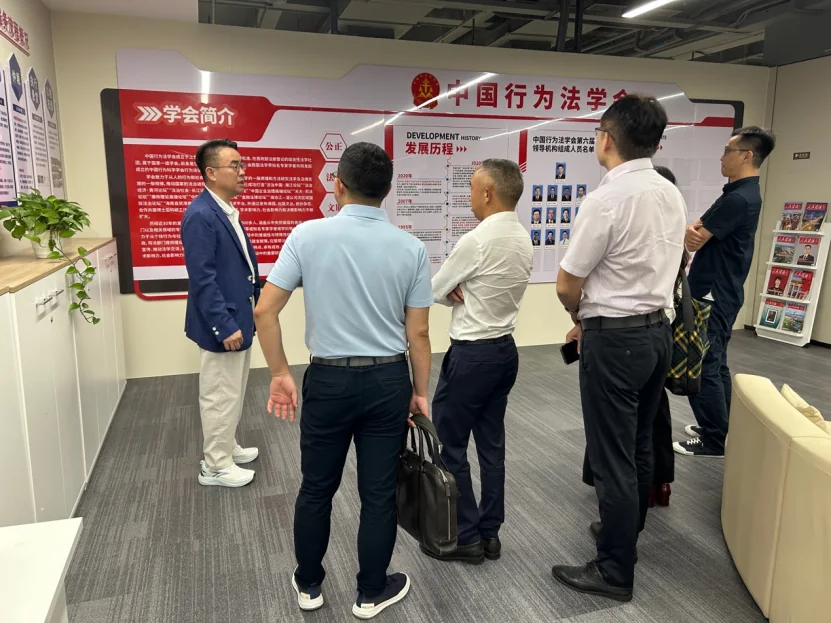

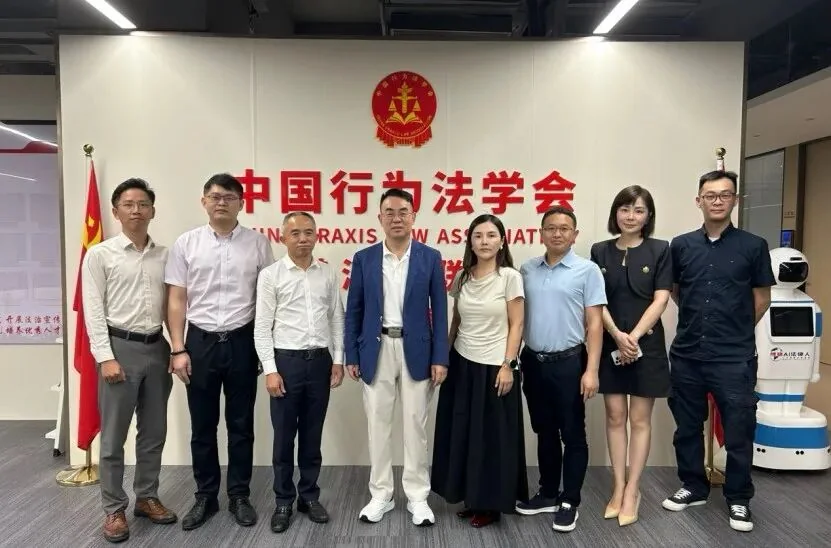
On 2 June 2026, Chen Shijie, Deputy Secretary-General of the Chinese Society of Behavioral Law and Director of its Guangdong–Hong Kong–Macao–Taiwan Liaison Office, met a delegation from Tengyue Construction Tech Group Co., Ltd. (Tengyue). The delegation included Shen Xiaopan, General Manager of the Finance Department; Wang Xinru, General Manager of the Legal Department; and Luo Tianqiang, General Manager of Tengyue’s Guangfo company. The talks covered construction risk management, asset revitalisation, legal services for overseas projects and legal-service cooperation in the Guangdong–Hong Kong–Macao Greater Bay Area.
Tengyue is a construction group under Country Garden Holdings Company Limited. Its activities include general contracting for building, municipal and mechanical and electrical engineering projects, as well as the development and application of construction robots. The group holds a special-grade qualification for building construction general contracting, operates in 26 Chinese provinces and municipalities and overseas markets including Malaysia, and has undertaken more than 3,000 construction projects in China.
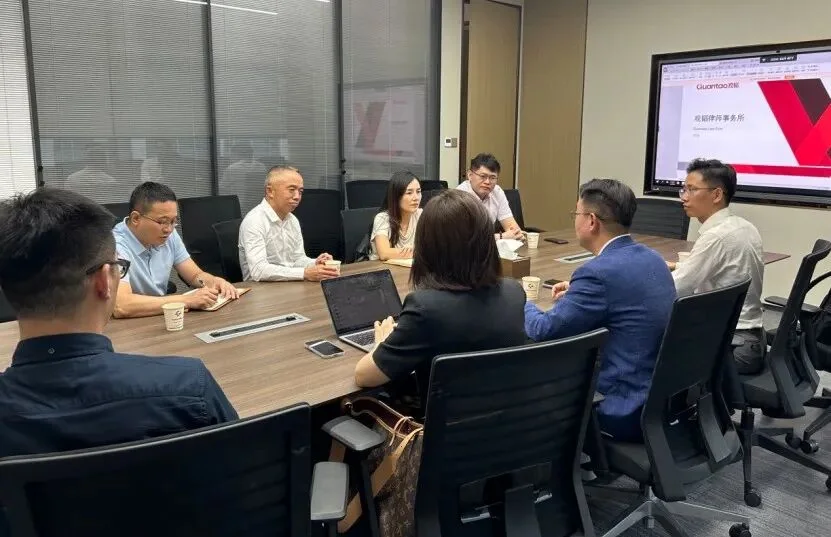
Dandan Fei, Deputy Director of the Liaison Office and a partner at Guantao Law Firm’s Shenzhen office, and Zheng Zhifan, Executive Partner of Guantao’s Shenzhen office, spoke during the meeting.
Legal needs arising from business operations and overseas expansion
Luo Tianqiang outlined Tengyue’s business activities and current priorities. Alongside construction and project delivery within the Country Garden group, Tengyue was strengthening its capacity to compete for external business and expanding in markets including Malaysia and parts of Africa. This broader reach was increasing demand for contract administration, project performance, final-account settlement and coordination with overseas legal advisers.
Chen Shijie said that construction businesses undergoing industry restructuring and transformation should combine lawful operations and early risk prevention with varied dispute-resolution channels and effective legal arrangements for asset disposal. The Chinese Society of Behavioral Law would draw on its research and professional networks to help legal practitioners address practical business needs and support stable operations and overseas projects.
Project performance, asset revitalisation and overseas operations
Wang Xinru described the legal team’s work on contracts, receivables, compliance systems and overseas projects. She noted that construction projects involve numerous parties and lengthy delivery chains, with legal risks extending from contract formation and performance to settlement and debt recovery. In overseas markets such as Malaysia, companies need to address payment terms, performance security, extension-of-time claims, quality and safety, alongside local licensing, workplace safety, tax compliance and dispute-resolution arrangements.
Shen Xiaopan discussed construction receivables, disposal of existing assets, supply-chain resources and access to restructuring expertise from the perspective of funding and asset management. Zheng Xiongqing, Deputy General Manager of Tengyue’s Guangfo company, contributed to discussions on international market development, business management and coordination of project resources.
Connecting professional legal services with project needs
Drawing on their experience in cross-border legal work, construction disputes and asset revitalisation, Dandan Fei and Zheng Zhifan discussed legal-risk identification in domestic and overseas projects, cooperation among legal advisers, construction-project risk management and the disposal of existing assets.
Participants noted that construction companies’ legal-service needs extend across project acquisition, contract performance, final-account settlement, debt recovery, asset disposal and overseas operations. Contract systems, performance management, the establishment of creditor claims and dispute-resolution arrangements should therefore be considered together in light of business objectives and the circumstances of each project.
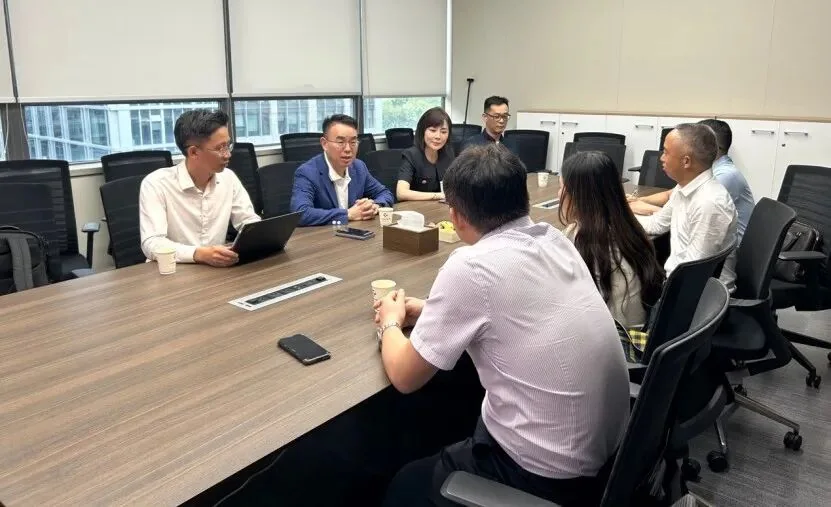
The parties expressed an intention to continue discussions around major projects and specific legal needs, including project legal reviews, asset disposal and access to domestic and overseas legal advisers, connecting legal research and professional services with business practice.